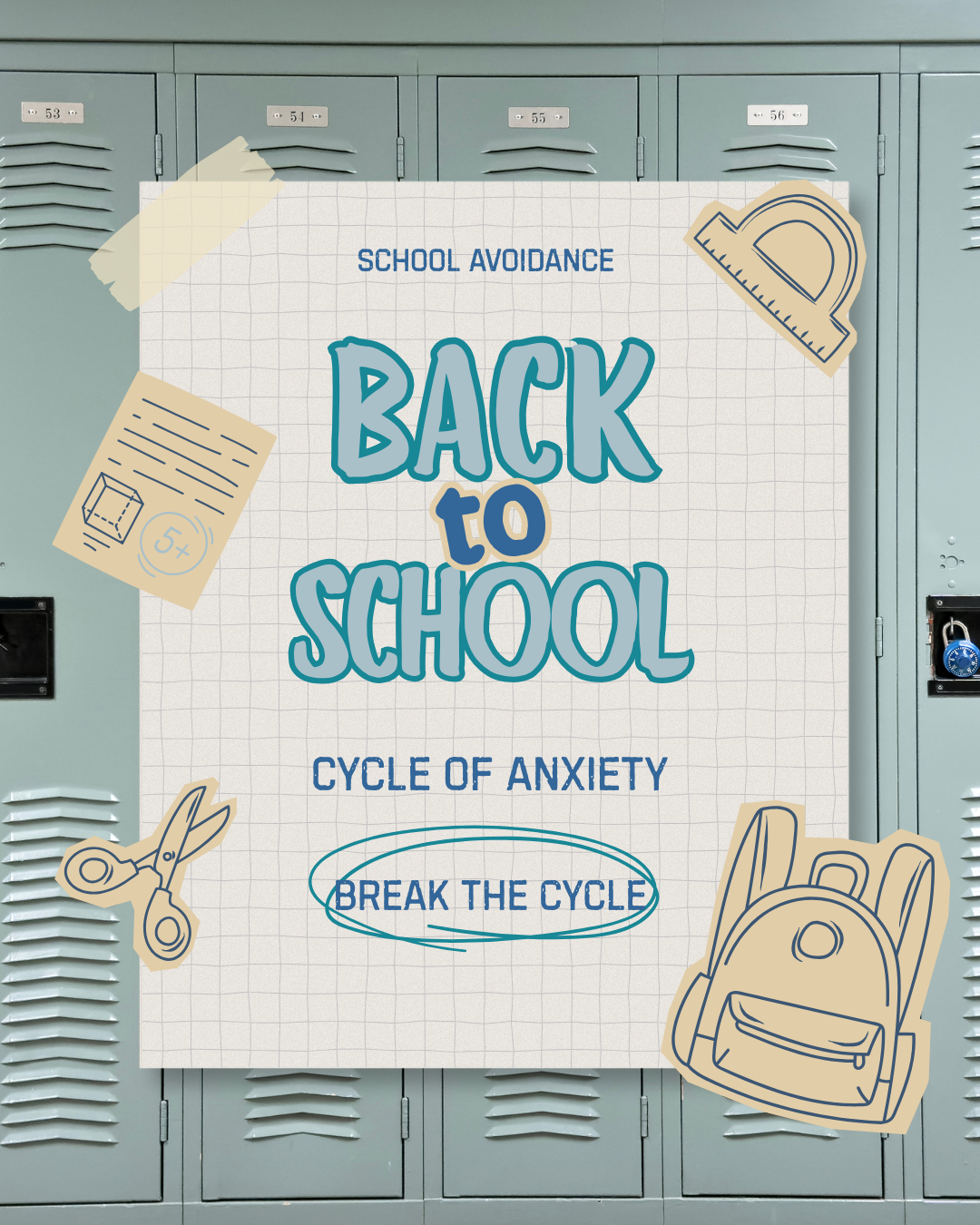
When Back-to-School Anxiety Becomes School Avoidance: Helping Children Face Their Fears
The beginning of a new school year brings change: new teachers, unfamiliar classrooms, increased academic expectations, shifting friendships, and a return to structured routines. Some nervousness during this transition is expected. A child may need reassurance, extra preparation, or time to settle into the new routine.
For some students, however, back-to-school anxiety develops into a pattern of school avoidance. This may look like refusing to get out of bed, repeatedly asking to stay home, arriving late, leaving school early, or frequently reporting headaches, nausea, stomachaches, dizziness, or fatigue on school mornings.
These symptoms should not automatically be interpreted as manipulation or defiance. Anxiety can create very real physical discomfort. At the same time, repeatedly allowing a child to escape school because they feel anxious can unintentionally strengthen the anxiety and make returning increasingly difficult.
The goal is not to ignore a child’s distress. It is to communicate: “I believe that this is hard, and I also believe you can handle it.”

When Back-to-School Anxiety Becomes School Avoidance: Helping Children Face Their Fears
The beginning of a new school year brings change: new teachers, unfamiliar classrooms, increased academic expectations, shifting friendships, and a return to structured routines. Some nervousness during this transition is expected. A child may need reassurance, extra preparation, or time to settle into the new routine.
For some students, however, back-to-school anxiety develops into a pattern of school avoidance. This may look like refusing to get out of bed, repeatedly asking to stay home, arriving late, leaving school early, or frequently reporting headaches, nausea, stomachaches, dizziness, or fatigue on school mornings.
These symptoms should not automatically be interpreted as manipulation or defiance. Anxiety can create very real physical discomfort. At the same time, repeatedly allowing a child to escape school because they feel anxious can unintentionally strengthen the anxiety and make returning increasingly difficult.
The goal is not to ignore a child’s distress. It is to communicate: “I believe that this is hard, and I also believe you can handle it.”