



Core Philosophy of ACT:
ACT doesn't aim to eliminate difficult thoughts and feelings. Instead, it teaches people to accept what is out of their control and commit to actions that enrich their lives.The aim of ACT is to help people develop psychological flexibility—the ability to be present, open up, and do what matters, even when life is hard.
Cognitive Behavioral Therapy (CBT) is one of the most widely used and evidence-based forms of psychotherapy. It's structured, goal-oriented, and focused on the present. At its core, CBT helps people understand the connection between their thoughts, feelings, and behaviors—and how changing unhelpful patterns can improve emotional well-being.
Core Principle of CBT
"What you think affects how you feel and what you do."
CBT teaches that many emotional and behavioral issues stem from distorted or unhelpful thinking patterns, which influence how we act and feel.
Dialectical Behavior Therapy (DBT) is a structured, evidence-based form of psychotherapy designed to help people manage intense emotions, improve relationships, and reduce harmful behaviors.
Core Philosophy of DBT
The word “dialectical” means bringing together opposites—especially the balance between:
DBT helps people accept themselves and work to change unhelpful behaviors at the same time.
Exposure and Response Prevention (ERP) is a powerful, evidence-based therapy primarily used to treat Obsessive-Compulsive Disorder (OCD) and related anxiety disorders. It’s a specific form of Cognitive Behavioral Therapy (CBT).
The idea is not to make the anxiety go away immediately, but to teach your brain that you can tolerate discomfort, and that nothing dangerous happens if you don’t do the compulsion.
Internal Family Systems (IFS) is a compassionate, non-pathologizing form of psychotherapy developed by Dr. Richard Schwartz.
The central idea is simple but powerful: We all have multiple “parts” inside us—and every part has a reason for being there.
Rather than seeing thoughts, emotions, or behaviors as problems to get rid of, IFS helps us understand and heal our inner system by building a relationship with these internal parts.
Core Concepts of IFS
Core Idea of MBCT
"You are not your thoughts."
MBCT helps people step back from automatic negative thinking and learn to observe their thoughts and feelings without judgment, without reacting, and without getting swept away by them.
In MBCT, mindfulness means:
Mindfulness helps break the cycle of rumination (repetitive negative thinking), which is often what triggers depressive or anxious episodes.
Mindfulness-Based Cognitive Therapy (MBCT) teaches you to:
It’s not about stopping your thoughts—it’s about changing your relationship to them.
Core Philosophy
“The client knows themselves best.” – Carl Rogers
Instead of focusing on diagnoses, techniques, or advice-giving, Person-Centered Therapy emphasizes empathy, acceptance, and authenticity. The therapist creates a safe, non-judgmental space where the client can explore their feelings and experiences openly, which naturally promotes healing and personal growth. It’s not about fixing people—it’s about being with them so they can reconnect with their own inner wisdom.
Play Therapy is a developmentally appropriate form of psychotherapy that uses play—a child’s natural language—as a way for them to express feelings, process experiences, and develop coping skills. It is most often used with children aged 3 to 12, but variations can be adapted for teens and even adults.
“Play is the child’s language, and toys are their words.” – Dr. Garry Landreth
Goals of Play Therapy
Solution-Focused Brief Therapy (SFBT) is a goal-oriented, future-focused approach to psychotherapy that emphasizes finding solutions rather than dwelling on problems.
Core Philosophy
“If it isn’t broken, don’t fix it.”
SFBT works on the idea that clients already have the resources and strengths to solve their problems—they may just need help identifying and using them.
Solution-Focused Brief Therapy is a positive, efficient approach that helps people move forward by:
It’s about finding solutions, not fixing problems.
Somatic Therapy is a body-centered form of psychotherapy that focuses on the connection between the mind and body. It’s based on the idea that trauma, stress, and emotional pain are stored not just in the mind but also in the body—in muscle tension, posture, breath patterns, and bodily sensations.
Core Idea
“The body keeps the score.” — Bessel van der Kolk
Somatic therapy helps people become aware of their bodily sensations and uses this awareness to release physical tension and heal emotional wounds. Somatic Therapy is a healing approach that uses the body’s wisdom to process and release emotional pain. It helps clients become aware of their physical experience and gently restore balance between mind and body.
Healing happens not only through words but also through feeling—and moving—the body.




I offer clinical supervision for Licensed Professional Counselor (LPC) in the state of IL working toward full licensure in accordance with state requirements.
My goal is to create a supportive, educational, and ethically grounded supervisory relationship that promotes professional growth and clinical competence.
Supervision includes:
Supervision is available for individuals or small groups.
Fee: $150 per hour (individual); group rates available upon request.
If you're a LPC seeking supervision, please feel free to reach out to discuss whether we’d be a good fit for you!


Andrea is certified by PATH, Intl. (Professional Association of Therapeutic Horsemanship) and an Equine Specialist in Mental Health and Learning (ESMHL).
For EAP treatment she partners with Soaring Eagles Stables in Plainfield, IL.
Andrea is certified by PATH, Intl. (Professional Association of Therapeutic Horsemanship) and an Equine Specialist in Mental Health and Learning (ESMHL).
For EAP treatment she partners with Soaring Eagles Stables in Plainfield, IL.

Immediate feedback: Horses react to your body language and emotional energy, helping you understand how you communicate or relate to others.
Nonjudgmental presence: Horses offer honest, unbiased interactions that help build trust and emotional safety.
Symbolic work: Clients may project thoughts or emotions onto the horse, which can be explored in therapy.
Embodied experience: Being physically present and engaged with a large, responsive animal can ground clients in the present moment and foster regulation.
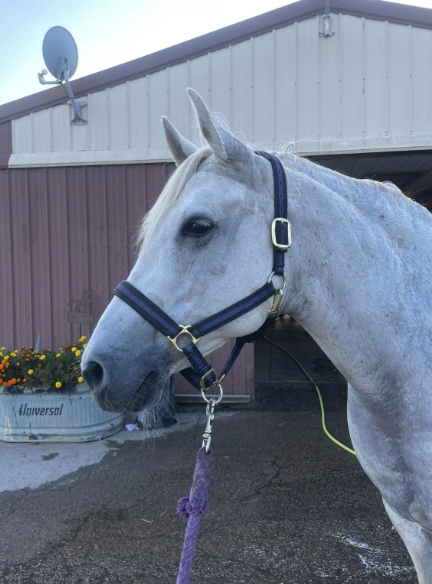

Equine-assisted psychotherapy can be helpful for individuals dealing with:
It’s especially effective for people who find traditional talk therapy difficult or who benefit from hands-on, experiential learning.